The Real Economics of Sustainability: Why Businesses Need to Act Now
By Emma Richards
“Nobody asks whether the fire alarm has delivered a financial return this quarter.”
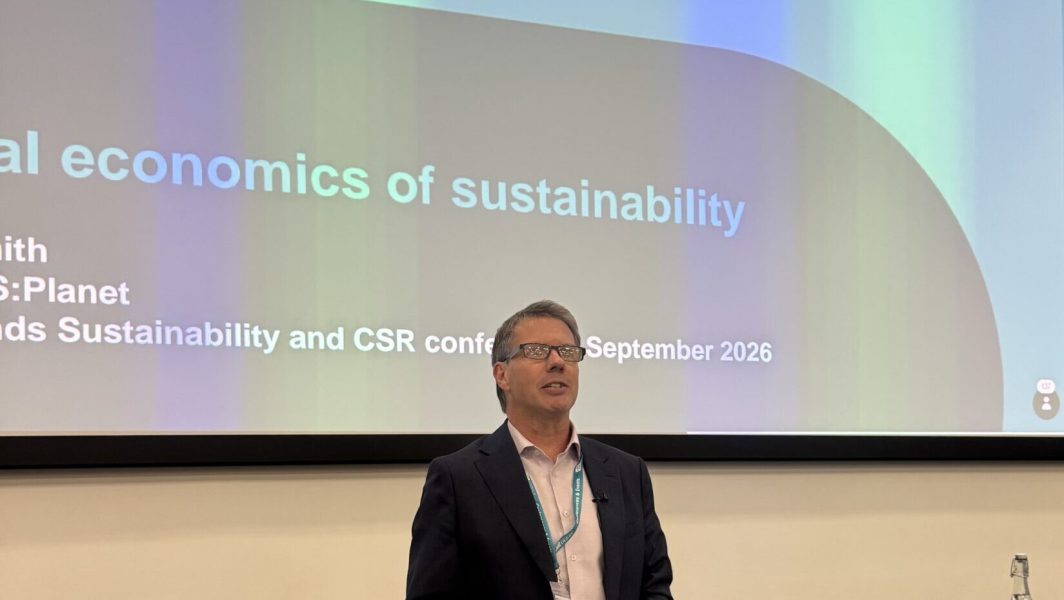
That was one of the lines from Richard Smith’s session at last week’s East Midlands Sustainability & CSR Conference. It got a laugh from the room, but it was making a serious point.
Richard’s session, “Pay Now or Pay More Later: The Real Economics of Sustainability”, looked at how businesses think about the cost of climate action, and why we often seem to apply a different set of rules to sustainability than we do to other areas of risk.
We spend money on fire alarms, insurance, cybersecurity, and risk management because we understand that sometimes you have to spend money to avoid a much bigger problem later. Nobody expects the fire alarm to demonstrate a quarterly financial return. It’s just something we accept as worth paying for.
So why do we expect climate action to prove its ROI before we’re prepared to invest?
Climate change is already affecting businesses, communities and the natural environment. The impacts aren’t waiting for a business case to be signed off, and they’re not going to stop while we work out whether the numbers stack up neatly in a spreadsheet.
Richard’s argument was that this doesn’t really stack up. If we’re thinking about sustainability purely in financial terms, there is still a very strong case for acting now. The cost of adapting to a much more disrupted world is unlikely to be smaller than the cost of making sensible changes today.
As Rachel Axten, who attended the session, put it: “We have to pay today, to save ourselves tomorrow.”
That idea seemed to resonate with people at the conference. One attendee described Richard’s session as “the talk of the day”, while Joanne Van AIEP said it was the session that “particularly stood out” for her.
Joanne also picked up on something else that came through in the session: the risk of getting so caught up in targets, reporting and measuring sustainability that we lose sight of why we’re doing it in the first place.
It’s a fair point. Sustainability can become a world of targets, acronyms and reporting requirements, particularly if you’re a business trying to work out where to start. Those things are important, but it’s easy to lose sight of the bigger picture when you’re buried in them.
The conference was a good reminder of that. There were plenty of discussions about what businesses can do, how regulation is changing, the role of supply chains and the practical challenges of decarbonisation. There were also some great examples of organisations already getting on with it. We really enjoyed being part of it and, most importantly, the conversations that came out of it.
And the conversation clearly didn’t stop when the session ended. One of the best pieces of feedback Richard received afterwards was: “Your session was the one I kept thinking about on the way home.”
That’s exactly what you hope for from a conference session. Not just a few nods in the room, but something that sticks with people and makes them think differently once they get back to work.
So, what now?
Climate change is complicated, but taking action doesn’t have to be.
If you’re new to sustainability, we can help you work out where to start. If you’ve been doing this for years, we can help you take things further. Either way, the aim is pretty much the same: understand what matters to your organisation, make well-informed decisions and start taking action.
PS: Looking for a speaker who can make sustainability practical, thought-provoking – and perhaps even a little funny? Richard and the PS: Planet team are open to conversations with conferences, businesses and workplaces. Get in touch.